Plan your visit to Fort Sumter
Fort Sumter is the harbor fort where the first shots of the American Civil War were fired, and visiting it feels more like a timed island excursion than a drop-in museum stop. Your day is shaped by the ferry schedule, the weather on the water, and a fairly compact visit once you land. The biggest mistake is treating it like a walk-up attraction when departure slots are limited. This guide covers timing, boarding, tickets, and what to prioritize on the island.
Quick overview: Fort Sumter at a glance
If you want the short version before you book, this is what actually changes the visit.
- When to visit: Daily; the Liberty Square visitor center is open 9am–4:30pm, and the first weekday ferry is noticeably calmer than mid-morning spring and summer sailings because school groups and later bookers tend to cluster then.
- Getting in: From $43 for standard entry with round-trip ferry. There isn’t a separate guided-tour upgrade on Headout right now, so booking ahead matters more than trying to upgrade later, especially from March through August.
- How long to allow: 2–3 hours for most visitors. Add extra time if you want the Liberty Square exhibits, slow harbor photos, or the first or last ferry flag ceremony.
- What most people miss: The bombproof museum rooms inside the fort and the Liberty Square exhibits before boarding are what give the site its context, and plenty of visitors rush past both.
- Is a guide worth it? A full guide isn’t essential because the ranger welcome is strong and the site is compact, but the visit is much richer if you stop and read the exhibits instead of treating it as only a photo stop.
🎟️ Ferry slots for Fort Sumter sell out days and sometimes weeks in advance during spring break, summer, and holiday weekends. Lock in your visit before the time you want is gone.
Jump to what you need
🕒 Where and when to go
🗺️ Getting around
🏰 What to see
♿ Facilities and accessibility
Where and when to go
How do you get to Fort Sumter?
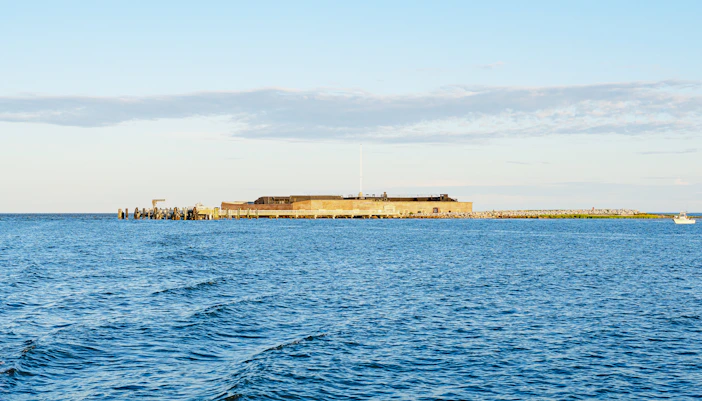
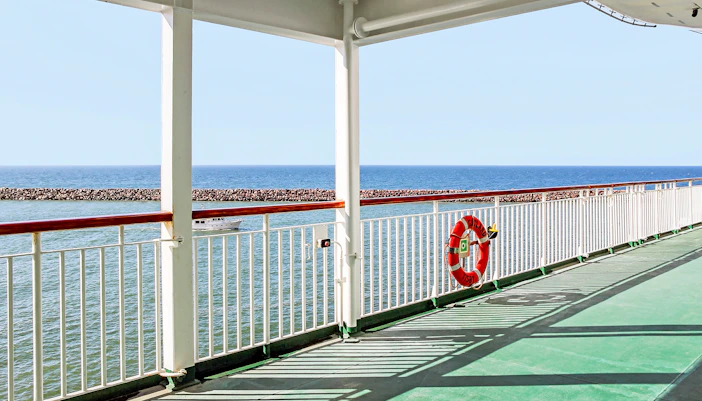
Fort Sumter sits in Charleston Harbor, and you can only reach it by ferry from downtown Charleston or Mount Pleasant.
Liberty Square address: 340 Concord St, Charleston, SC 29401 | Find on Maps
Patriots Point address: 40 Patriots Point Rd, Mount Pleasant, SC 29464 | Find on Maps
- Walk/rideshare: Liberty Square → 5–15 min from much of the Historic District → easiest if you’re staying downtown.
- Car: Aquarium Garage behind Liberty Square → 3-min walk → allow extra time in spring and summer because this is a busy parking area.
- Car: Patriots Point parking → short walk to boarding → simplest if you’re driving from Mount Pleasant or the airport.
- Rideshare: Patriots Point entrance → 2–3 min walk → useful if you want to avoid parking decisions.
Which entrance should you use?
There isn’t one main gate at the fort itself; the real choice is your departure dock, and most mistakes happen when visitors show up at the wrong one.
- Liberty Square: Located in downtown Charleston. Best for visitors staying in the Historic District or pairing the tour with other downtown sights. Expect a 15–20 min check-in and boarding window.
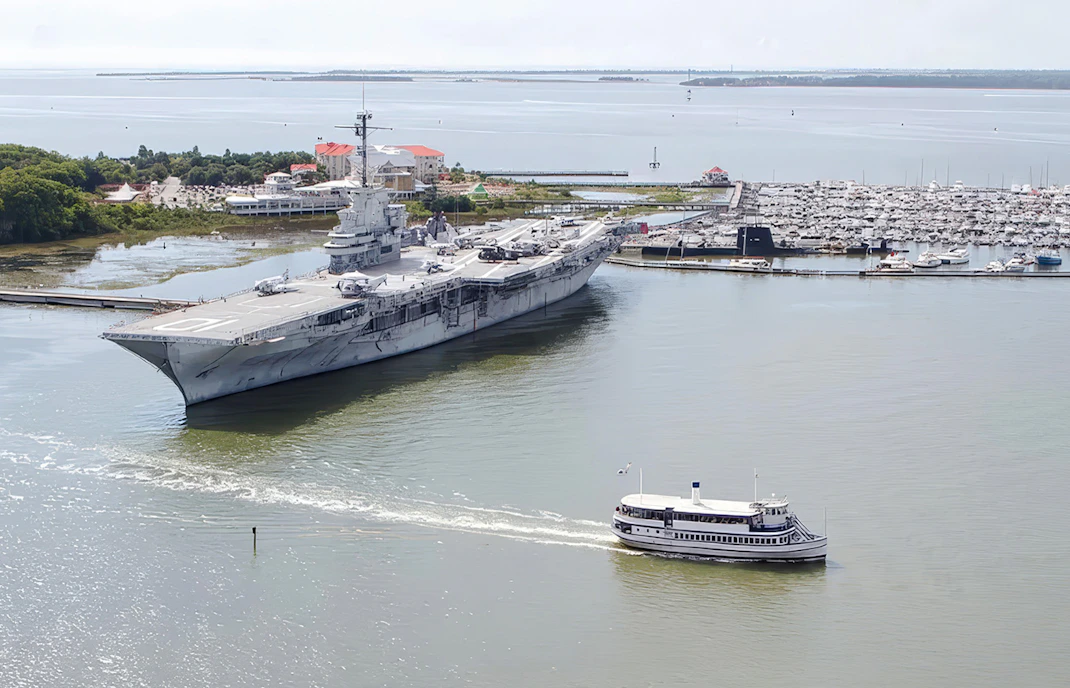
- Patriots Point: Located beside the naval museum in Mount Pleasant. Best for drivers, suburban stays, and same-day USS Yorktown visits. Expect a 15–20 min check-in and boarding window.;
When is Fort Sumter open?
- Daily: Liberty Square visitor center is open 9am–4:30pm.
- Daily: Ferry departures run throughout the day, with exact sailing times changing by season.
- Last entry: Your final entry is the last scheduled ferry departure on your ticket.
When is it busiest? Mid-morning departures from March–August and on holiday weekends fill fastest, which means tighter boarding lines and less space on the upper deck.
When should you actually go? The first weekday ferry is your best bet for cooler weather, cleaner photo lines, and the morning flag ceremony before the fort feels busier.
How do you get around Fort Sumter?
Fort layout
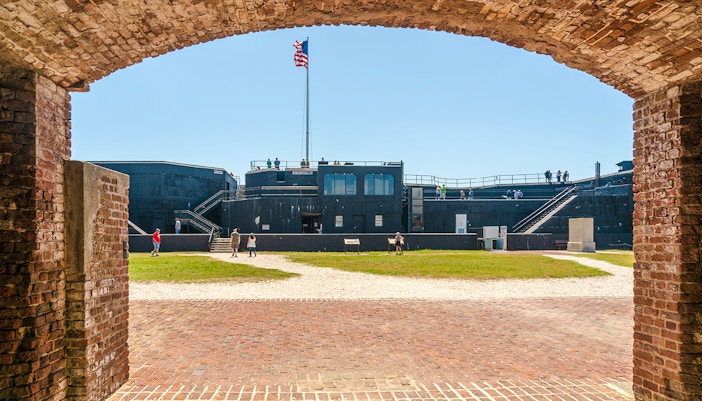
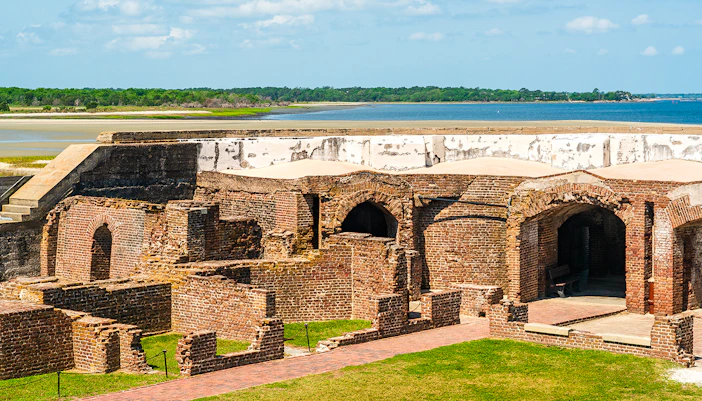
Fort Sumter is best explored on foot, and most visitors can cover the essential spaces in about an hour once they land. The main focal point sits directly ahead after disembarkation, with the upper ramparts and cannon positions drawing most people upward first.
- Parade ground: Central open area with orientation signs and the flagstaff → budget 10–15 min.
- Upper ramparts: Cannon positions, harbor views, and the strongest sense of the fort’s defensive layout → budget 15–20 min.
- Bombproof rooms: Museum-style spaces with artifacts and exhibits inside the lower structure → budget 10–15 min.
- Perimeter walls: Harbor-facing edges where you can see Charleston, shipping lanes, and the approach back to the dock → budget 10 min.
Suggested route: Start with the ranger welcome, climb to the ramparts while the group is still spreading out, then come back down for the museum rooms most people skip on their way to the views.
Maps and navigation tools
- Map: On-site orientation signs and ranger briefings cover the compact layout → get your bearings as soon as you step off the ferry.
- Signage: Wayfinding is good enough for most visitors because the site is small, but you can still miss the lower exhibit rooms if you only follow the crowd uphill.
- Audio guide/appmap/audio: There isn’t a standard Audioguide experience to lean on here → the ranger welcome and exhibit panels do most of the interpretation.
- Large outdoor POIs only: Not applicable for route-finding, because Fort Sumter is compact and doesn’t require trail navigation.
💡 Pro tip: Head upstairs first, then circle back down. The best harbor views draw everyone upward, and that’s exactly why the exhibit rooms below stay quieter.
What is Fort Sumter worth visiting for?
Parade ground and flagstaff
Site type: Central ceremonial space
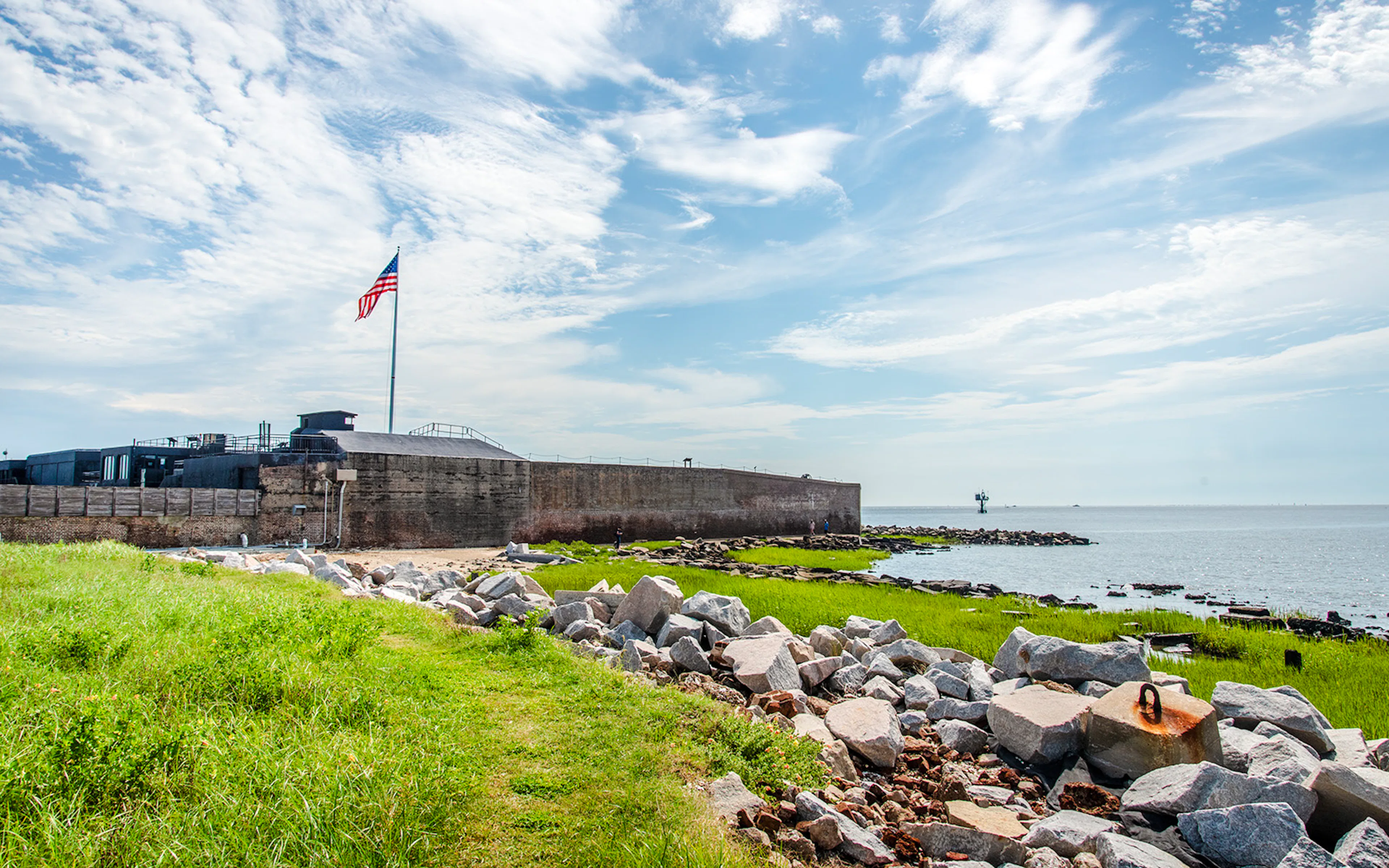
This is the emotional center of the visit, especially on the first and last ferries when rangers handle the flag ceremony. It’s easy to treat it as just an open courtyard, but it’s where the fort’s scale and damage make the strongest first impression. Most visitors pause here briefly, then move on too fast without taking in how exposed the site feels in the middle of the harbor.
Where to find it: Directly ahead after you disembark from the ferry.
Upper ramparts and cannon positions
Era: 19th-century artillery fortification
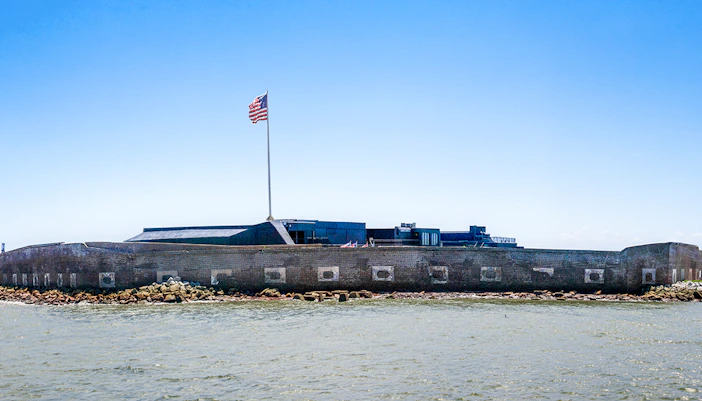
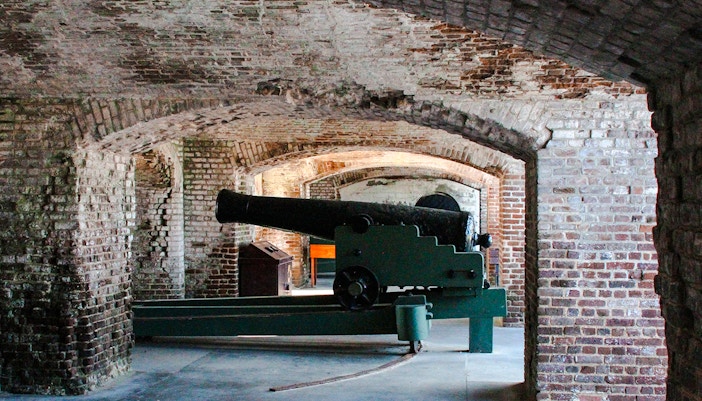
The upper level gives you the clearest sense of Fort Sumter as a military site rather than a ruin. You can see original cannon positions, the harbor approaches, and just how strategic this island placement was. Most visitors photograph the skyline and leave, but the gun placements and sightlines are what explain why this location mattered in 1861.
Where to find it: Up the stairs from the main parade area, along the top level of the fort.
Bombproof museum rooms
Collection type: Recovered Civil War artifacts
These dim interior rooms hold some of the most grounding material in the whole visit — artifacts, interpretation, and a closer sense of daily life inside the fort. They matter because they turn the site from a scenic harbor stop into an actual historical experience. Most visitors miss them because the crowd flow pulls them upward first and the lower spaces feel less obvious.
Where to find it: Inside the lower-level rooms built into the fort walls below the ramparts.
Harbor walls and Charleston views
Viewpoint: Panoramic waterfront outlook
The ferry ride is part of the experience, and the fort’s outer walls let you keep reading the harbor even after you land. From here you can look back toward Charleston, watch harbor traffic, and understand how isolated the fort would have felt. Most people focus on one skyline photo, but the real payoff is walking different edges of the wall for changing sightlines.
Where to find it: Along the outer ramparts and perimeter edges of the fort.
Facilities and accessibility
- 🚻 Restrooms: Accessible restrooms are available on the ferry, while the fort’s on-island restrooms require stairs.
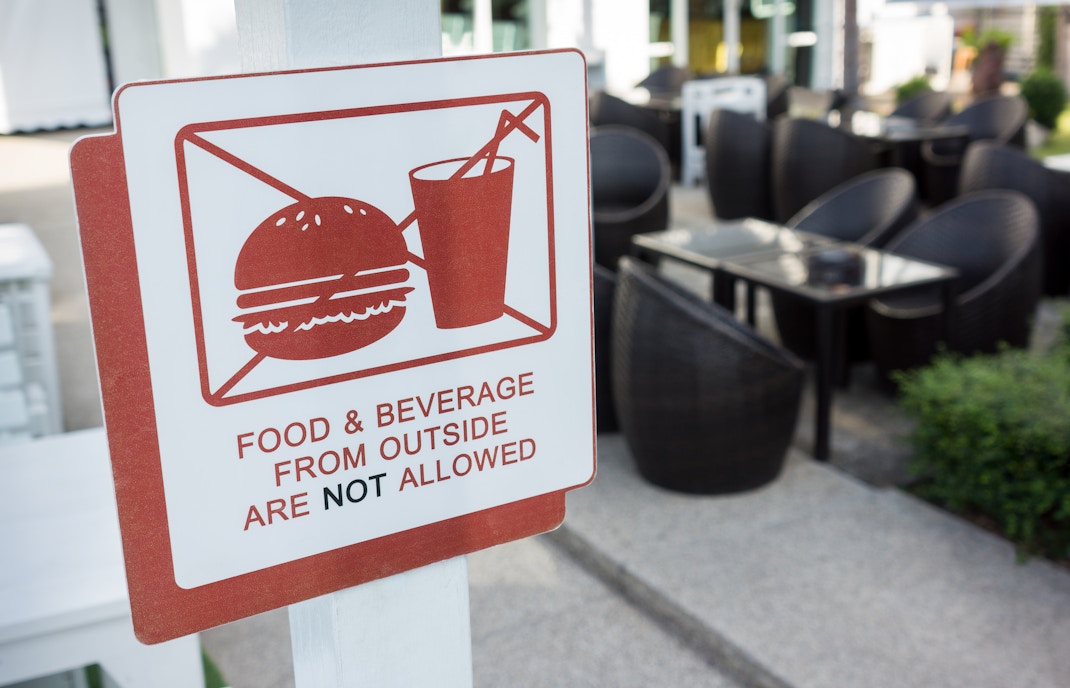
- 🍽️ Food and drinks: Drinks and snacks are available for purchase on the ferry, but no food is allowed on Fort Sumter grounds.
- 🛍️ Bookstore and souvenirs: The fort has an on-site museum, bookstore, and souvenir shop during your self-guided visit.
- 🪑 Seating: Indoor seating on the ferry gives you a comfortable break during the round-trip crossing.
- 🅿️ Parking: Liberty Square visitors typically use the nearby Aquarium Garage, while Patriots Point has on-site parking close to boarding.
- ♿ Mobility: The ferry is wheelchair accessible and includes an elevator or lift plus accessible restrooms, but parts of the fort, including the museum, bookstore, restrooms, and top level, are stair-only because there is currently no elevator service on the island.
- 👁️ Visual impairments: Service animals are allowed, and the ranger welcome talk is a useful context because there isn’t a separate standard Audioguide experience once you land.
- 🧠 Cognitive and sensory needs: The calmest experience is usually the first weekday ferry, while engine noise, boarding announcements, and wind on the open deck are the loudest parts of the visit.
- 👨👩👧 Families and strollers: Infants and small children can come in a stroller, but families should expect some stair carries and uneven pacing once they move beyond the dock area.
Fort Sumter works best for school-age children who’ll enjoy the ferry ride, cannons, and sense of standing where history actually happened, though younger kids often treat it more as a short boat outing.
- 🕐 Time: 2–2.5 hours is realistic with children, and the ferry plus rampart views usually hold attention better than a long exhibit-heavy visit.
- 🏠 Facilities: The ferry’s restrooms and indoor seating do most of the heavy lifting for families because the fort itself is more exposed and stair-heavy.
- 💡 Engagement: Let children look for cannons, ships, and the Charleston skyline on the ride in so the fort feels like a destination before the history starts.
- 🎒 Logistics: Bring sunscreen, a hat, and a light layer because harbor wind can feel cooler than downtown even on warm days.
- 📍 After your visit: Patriots Point is the easiest family-friendly add-on if you want bigger ships and more room to move after the fort.
Rules and restrictions
What you need to know before you go
- Entry requirement: You need a valid ticket for a specific ferry departure, and boarding starts 15 minutes before sailing, so late arrivals have very little flexibility.
- Bag policy: Bring a small day bag because there are no published lockers or bag-drop facilities built into the visit.
- Re-entry policy: Your visit is tied to your booked ferry, so once your return sailing leaves, the outing is effectively over.
Not allowed
- 🚫 Food and drink: No food is allowed on Fort Sumter grounds, even though drinks and snacks are available for purchase on the ferry.
- 🐾 Pets: Pets are not permitted, but service animals are allowed.
- 🖐️ Weapons: Concealed weapons are not permitted anywhere in the tour experience.
Photography
Personal photography is part of the appeal here, especially on the harbor crossing, the ramparts, and during skyline views from the fort. The practical limit is mobility rather than a photo permit system, keep gear easy to carry, follow crew and ranger instructions during boarding and ceremonies, and assume handheld setups are the smoothest fit for the ferry and stairs.

Good to know
- Federal passes: National Park passes do not cover the ferry fee, because the boat transfer is part of the paid tour.
- Payments: Ticket windows and onboard purchases are card-only, so don’t rely on cash at the dock.
Practical tips
- Booking and arrival: Book a few days ahead in the fall and as early as you can for March–August, because missing your preferred sailing here is a bigger problem than at a walk-up attraction.
- Pacing: Don’t use your whole visit budget on the harbor deck going out; save 40–60 minutes for the fort itself and another 15–30 minutes if you’re boarding from Liberty Square and want the exhibits there.
- Crowd management: First weekday sailings are the sweet spot because they usually feel less crowded on deck, run in cooler conditions, and include the morning flag ceremony.
- What to bring or leave behind: A small bag, sunscreen, sunglasses, and a light wind layer help more than bulky gear, because there are no lockers and every extra item becomes something you carry up stairs.
- Food and drink: Eat before boarding if you’re on a late-morning or early-afternoon ferry, because the full outing can easily keep you busy for 2.5 hours, and no food is allowed once you’re on the fort.
What else is worth visiting nearby?

Patriots Point Naval & Maritime Museum
Distance: ~6km, 15 min by car
Why people combine them: It gives you a strong military-history pairing across two eras, and it also makes practical sense if you’re already choosing the Patriots Point departure dock.

Rainbow Row
Distance: ~1.5km, 20 min walk
Why people combine them: It’s an easy downtown add-on before or after a Liberty Square departure, and it keeps the day focused on Charleston’s waterfront history without more transport logistics.
Also nearby
Waterfront Park
Distance: ~850m, 10 min walk
Worth knowing: It’s an easy decompression stop after the ferry if you want harbor views without another timed attraction.
South Carolina Aquarium
Distance: ~120m, 2 min walk
Worth knowing: It’s the simplest family-friendly indoor follow-up if you’re boarding from Liberty Square and want to extend the day nearby.
Eat, shop and stay near Fort Sumter
- On-site: Drinks and light snacks are sold on the ferry, and they’re best treated as a convenience fallback rather than a full meal.
- Near Liberty Square: The Historic District around Concord Street has better pre-visit coffee stops and post-tour sit-down options if you’re sailing from downtown.
- Near Patriots Point: Mount Pleasant dining is easier by car than on foot, so it works better after your ferry than during a tight schedule.
- 💡 Pro tip: Eat before boarding if you’re taking a midday sailing, because the ferry ride plus island visit can easily stretch past your normal lunch window.
- Fort Sumter bookstore: Civil War titles, interpretive materials, and small keepsakes make this the most worthwhile stop if you want the visit to feel grounded in the site.
- Fort Sumter souvenir shop: It’s right on the island and easy to browse before reboarding, so you don’t need to build in separate shopping time elsewhere.
Downtown Charleston is a smart base if you’re using the Liberty Square departure, especially on a short trip where walkability matters. Mount Pleasant is easier if you’re driving and want simpler parking, but it doesn’t feel as convenient for a first stay focused on Charleston’s historic core.
- Price point: Downtown stays tend to run higher, while Mount Pleasant usually gives you more space and easier parking for the money.
- Best for: Downtown suits short stays and visitors who want to walk to the dock, while Mount Pleasant suits drivers and travelers pairing Fort Sumter with Patriots Point.
- Consider instead: The French Quarter or the broader Historic District are better fits for longer stays if you want restaurants, walkable sightseeing, and less dependence on a car.
Frequently asked questions about visiting Fort Sumter
Most visits take 2–3 hours from boarding to return. That usually includes arriving early for check-in, a 30-minute ferry each way, and about 60 minutes on the island. If you also want time at the Liberty Square exhibits or plan to linger for harbor photos, stay closer to the 3-hour end.
Yes, it’s smart to book in advance because ferry capacity is limited and the best departure times sell out first. This matters most from March through August, on holiday weekends, and for first-ferry departures. Waiting until the day of the visit is possible, but only if there are still seats left.
Arrive at least 15 minutes before departure. Boarding begins shortly before sailing, and the boat schedule controls the whole experience, so there isn’t much flexibility if you’re late. Give yourself more buffer if you’re parking at Liberty Square in spring or summer.
Yes, you can bring a small bag or backpack. A compact day bag is the best choice because there are no built-in lockers, food isn’t allowed on the fort, and extra gear just becomes something you carry on the ferry and up stairs. Pack light, especially if you want to move easily around the island.
Yes, personal photography is one of the best parts of the visit. The ferry ride, skyline views, cannon positions, and flag ceremony all make strong photo stops. Keep your setup easy to carry, though, because boarding areas and stairs are tighter than a typical open museum space.
Yes, Fort Sumter works well for groups, especially school groups, history clubs, and multigenerational families. The shared ferry ride keeps the logistics simple, and the ranger welcome gives everyone the same starting context. Just book early, because group size matters more here when departure capacity is limited.
Yes, especially if your children will enjoy the boat ride, cannons, and harbor setting. Most families find the outing manageable because the full experience is usually under 3 hours, but younger children may lose interest before the history fully lands. The ferry often ends up being as memorable as the fort itself.
Partly, but not fully. The ferry is wheelchair accessible and has accessible restrooms, and boarding ramps can usually accommodate mobility devices, though tide and weather conditions can affect access. Once you reach the fort, some key spaces remain stair-only, including the museum, bookstore, restrooms, and top level.
Yes, but with limits. Drinks and snacks are available for purchase on the ferry, while no food is allowed on Fort Sumter grounds. If you want a proper meal, eat before boarding or plan to head back into downtown Charleston or Mount Pleasant after the tour.
No, a National Park Pass does not cover the ferry fee. The fort is managed by the National Park Service, but access depends on the authorized ferry operator, and that transportation cost sits outside the federal pass system. You still need a paid tour ticket for the boat.
Tours run rain or shine, but severe weather or unsafe harbor conditions can still cancel a sailing. The captain makes that decision at departure time and, if needed, during the tour itself. Wind matters more than many visitors expect, so bring a layer even when Charleston feels warm on land.